
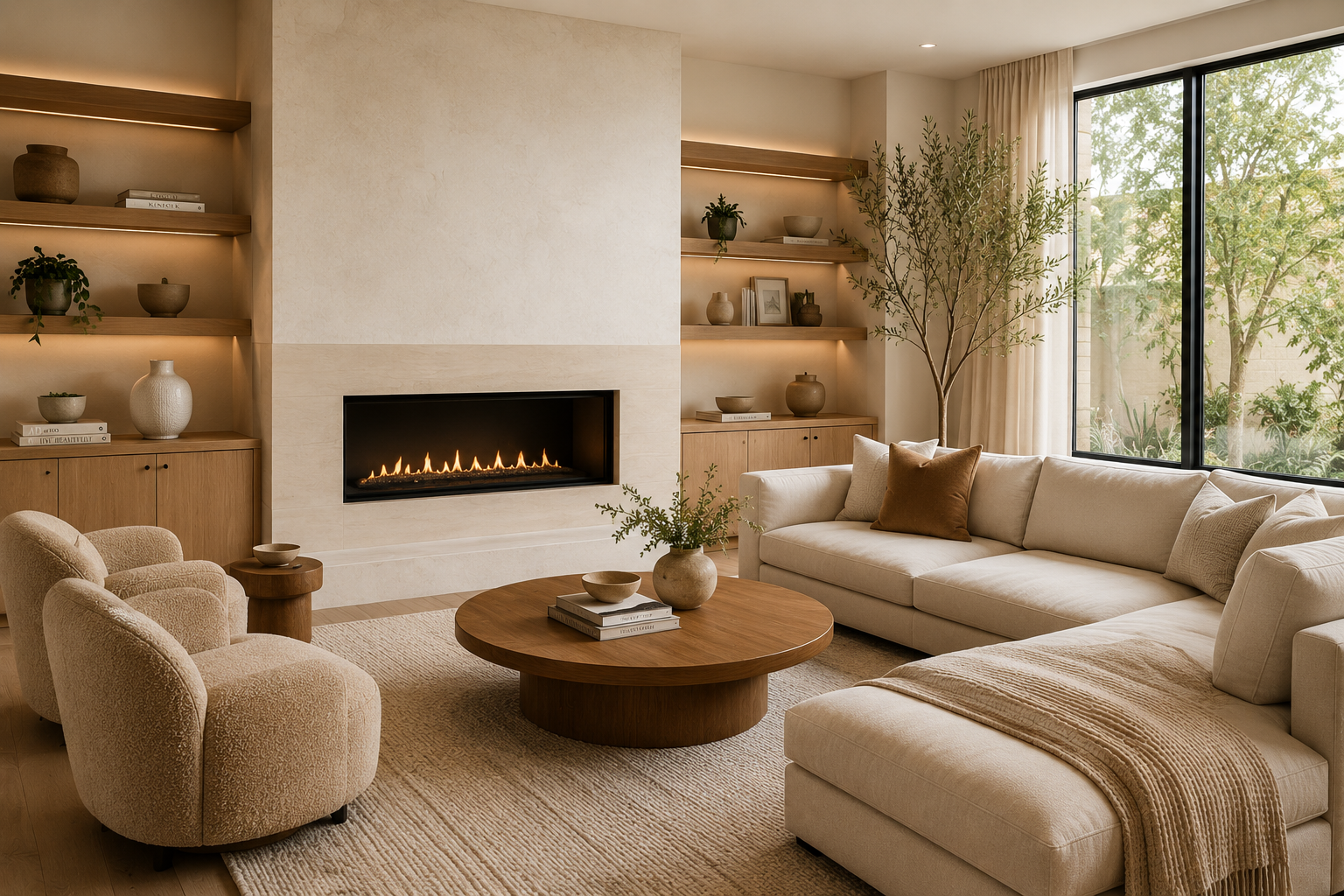
Luxury home design is entering a very different eta than the one that dominated the past decade.
For years, the definition of luxury was often tied almost entirely to scale and visual impact. Larger homes, dramatic entrances, oversized rooms, double-height ceilings, expansive glazing, and statement finishes became the defining characteristics of high-end custom builds. The emphasis was frequently placed on creating homes that impressed people immediately upon entering them, often prioritizing spectacle and appearance above the actual day-to-day experience of living within the space.
But across Ontario’s luxury custom home market, that mindset is beginning to shift in a very noticeable way.
Today’s homeowners are becoming far more intentional about how they want their homes to function, how they want their spaces to feel emotionally, and how architecture can better support their lifestyle over the long term. Rather than simply building homes that look luxurious, people are increasingly focused on creating homes that feel calming, restorative, timeless, practical, and deeply connected to the realities of modern living.
As a result, many of the most important design trends shaping custom homes in 2026 are not necessarily about excess or extravagance at all. Instead, they revolve around wellness, warmth, flexibility, longevity, functionality, and emotional comfort — all while still maintaining a strong sense of sophistication and elevated design.
Here are the biggest luxury custom home design trends shaping Ontario homes in 2026.
1. Warm Minimalism Is Replacing the Cold, Sterile Modernism of the Past
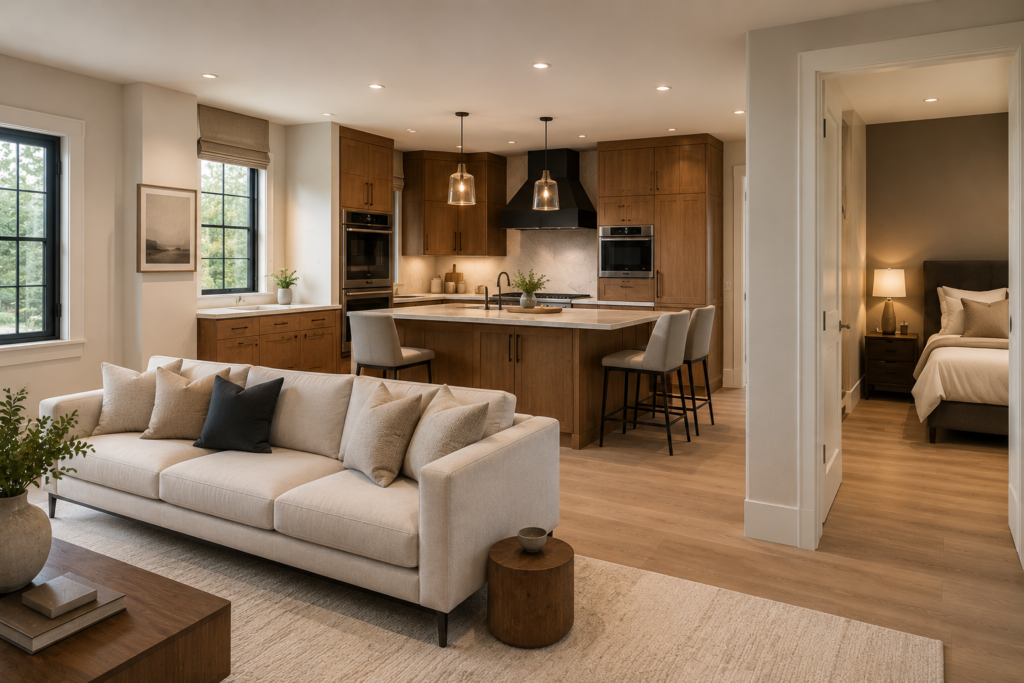
One of the most significant changes happening in luxury residential design right now is the gradual movement away from the ultra-sterile modern aesthetic that dominated custom homes for many years, toward spaces that feel significantly warmer, softer, and more emotionally inviting while still maintaining a refined and contemporary architectural language.
For a long time, luxury modern homes were heavily defined by stark white interiors, sharp black contrasts, glossy finishes, highly polished surfaces, and extremely minimal environments that often looked visually striking in photographs but could sometimes feel emotionally distant or difficult to truly relax within on a daily basis. While homeowners still appreciate clean lines and uncluttered spaces, many people are now recognizing that there is a difference between simplicity and sterility.
In 2026, homeowners are gravitating toward what many designers refer to as warm minimalism, which blends contemporary architecture with natural materials, layered textures, softer forms, and a more grounded overall atmosphere.
Across Ontario custom homes, designers are increasingly incorporating materials such as white oak, walnut, limestone, travertine, textured plaster, warm metals, earthy fabrics, and natural stone surfaces that contain subtle movement and imperfections rather than perfectly polished uniformity. Curved architectural details are becoming more common, helping spaces feel softer and less rigid, while layered lighting strategies are replacing the overly bright, flat illumination that once dominated modern interiors.
The result is a home that still feels sophisticated and elevated, but also feels emotionally comfortable, calming, and genuinely livable in a way that many earlier modern homes often did not.
Increasingly, homeowners are no longer striving for spaces that simply look impressive for guests or photographs. They want homes that feel peaceful to wake up in, comfortable to spend time in, and emotionally restorative at the end of long and demanding days.
2. Wellness-Centered Design Is Becoming One of the Defining Features of Luxury Homes
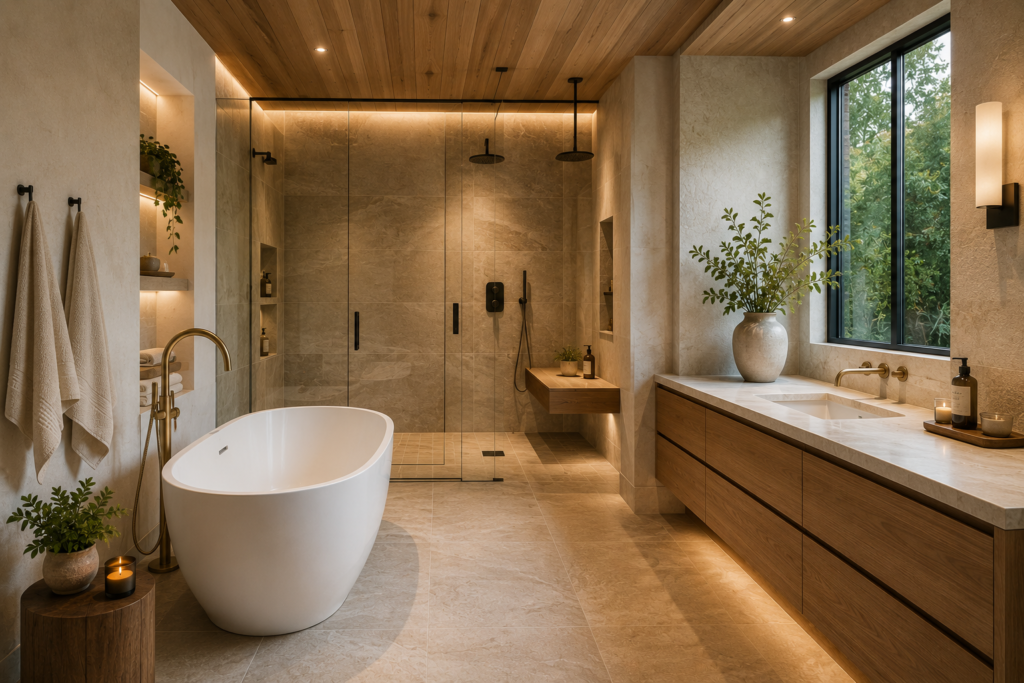
Another major shift influencing custom home design in 2026 is the growing emphasis on wellness-centered living, where the home itself is intentionally designed to support both physical and mental well-being in a much deeper and more integrated way than in previous years.
Homeowners are becoming increasingly aware that the spaces they live in directly affect their stress levels, sleep quality, focus, productivity, mood, and overall quality of life. As a result, luxury is no longer being defined solely by premium finishes or impressive square footage. Increasingly, true luxury is being associated with peace, calm, comfort, recovery, and the ability for the home to function as a sanctuary from the pace and noise of modern life.
This shift is especially noticeable throughout Ontario, where long winters and extended periods spent indoors have made homeowners far more conscious of how their environments influence their emotional and physical state throughout the year.
Natural light has become one of the most important priorities in modern custom home design, with oversized windows, skylights, open staircases, brighter interiors, and carefully planned sightlines all being used to maximize daylight penetration throughout the home. This emphasis on light is not only aesthetic but psychological, helping spaces feel more uplifting and energizing during darker months.
Bathrooms are increasingly being transformed into spa-like retreats rather than purely functional spaces, incorporating features such as steam showers, heated flooring, oversized soaking tubs, calming neutral palettes, and natural materials intended to create a stronger sense of relaxation and restoration.
At the same time, dedicated wellness areas are becoming increasingly common in high-end custom homes, including private gyms, yoga studios, infrared saunas, meditation rooms, cold plunge areas, and advanced air purification systems that contribute to overall health and comfort within the home.
The broader shift taking place is that homeowners no longer see wellness as a separate activity that happens outside the home. Instead, they are designing homes that actively support healthier, calmer, and more balanced living every single day.
3. Homes are Being Designed Around the Realities of Everyday Life Rather Than Purely Around Entertainment.
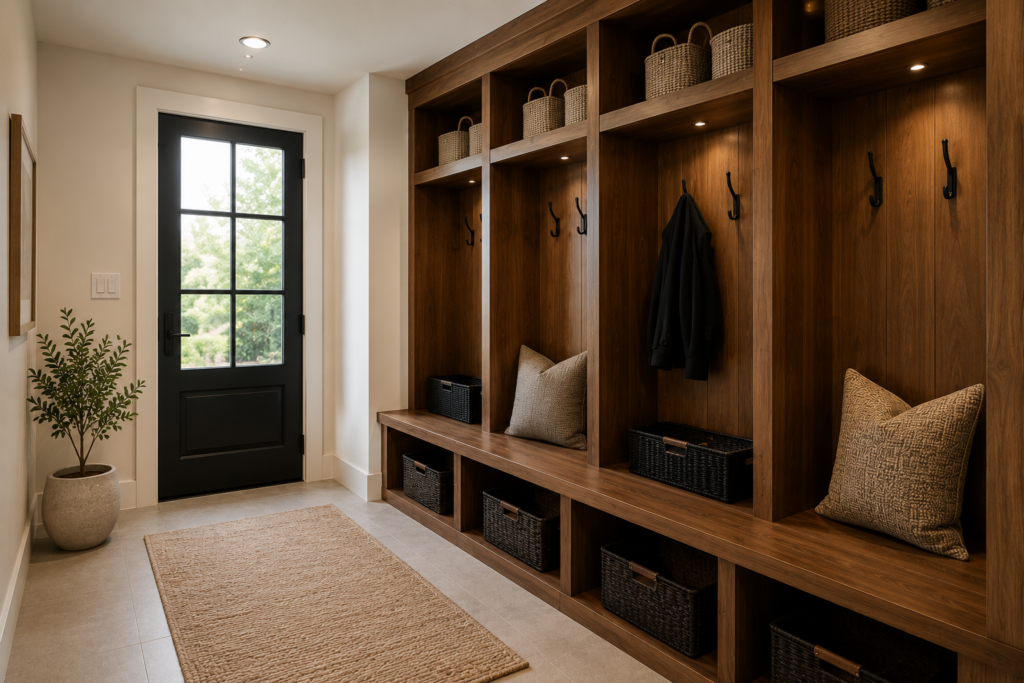
One of the most important realizations homeowners have had over the past several years is that while dramatic open-concept homes may look beautiful in theory, they do not always support the practical realities of everyday life particularly well.
For a long time, luxury homes heavily emphasized openness and visual continuity, often eliminating walls and dividing lines almost entirely in pursuit of a more dramatic and expansive appearance. While those spaces photographed beautifully and created impressive first impressions, many families eventually discovered that completely open layouts often introduced challenges related to privacy, noise, organization, clutter, and the ability for multiple people to comfortably coexist within the same environment throughout the day.
In 2026, homeowners are increasingly looking for a more thoughtful balance between openness and functionality.
People still want homes that feel spacious, connected, and visually open, but they also want spaces that support working from home, raising children, hosting guests, relaxing privately, maintaining organization, and adapting to changing family needs over time.
As a result, layouts are becoming significantly more intentional and better aligned with real-world living patterns.
Kitchens, for example, are increasingly being paired with concealed prep kitchens and oversized walk-in pantries that allow homeowners to maintain clean and visually calm entertaining spaces while still accommodating the realities of cooking, storage, and daily use behind the scenes.
Flexible rooms that can evolve over time are also becoming increasingly important, allowing spaces to transition between office, lounge, guest room, study area, or recreational use depending on the family’s needs at different stages of life.
Even traditionally overlooked areas of the home, such as mudrooms and transitional entry spaces, are receiving far greater design attention in Canadian homes due to the realities of snow, wet weather, winter clothing, sports equipment, and everyday family logistics. Rather than functioning purely as utilitarian spaces, mudrooms are now being designed with custom millwork, integrated storage solutions, durable finishes, elevated lighting, and architectural detailing that allow them to feel cohesive with the overall luxury aesthetic of the home.
The broader trend is clear: homeowners are increasingly prioritizing homes that feel beautiful to actually live in on a daily basis rather than homes designed purely around appearance or occasional entertaining.
4. Multi-Generational Living Is Reshaping the Way Luxury Homes Are Planned
One of the most influential lifestyle shifts impacting custom home design throughout Ontario is the growing rise of multi-generational living arrangements, which are becoming increasingly common across many communities for both financial and cultural reasons.
As housing costs continue to rise and family structures evolve, many homeowners are looking for ways to accommodate aging parents, adult children, or extended family members within a single property while still maintaining comfort, privacy, and independence for everyone involved.
This trend is especially prevalent across many multicultural communities throughout the GTA, where multi-generational living has long been viewed not simply as a financial solution, but as an important part of family life and support systems.
However, unlike older in-law suite concepts that often felt disconnected or secondary to the main home, today’s multi-generational custom homes are being designed far more intentionally and seamlessly from the very beginning of the architectural planning process.
Separate entrances, secondary laundry areas, private suites, independent living spaces, additional kitchens or kitchenettes, and flexible basement layouts are increasingly being integrated directly into the overall design language of the home rather than appearing like later additions or compromises.
The objective is no longer simply fitting more people under one roof. Instead, the focus has shifted toward creating homes that allow multiple generations to live together comfortably while preserving privacy, dignity, autonomy, and long-term flexibility for everyone within the household.
And as this trend continues to grow across Ontario, it is likely to become one of the defining considerations shaping luxury residential architecture over the coming years.
5. Kitchens Are Becoming More Architectural, Refined, and Deeply Integrated Into the Overall Design of the Home
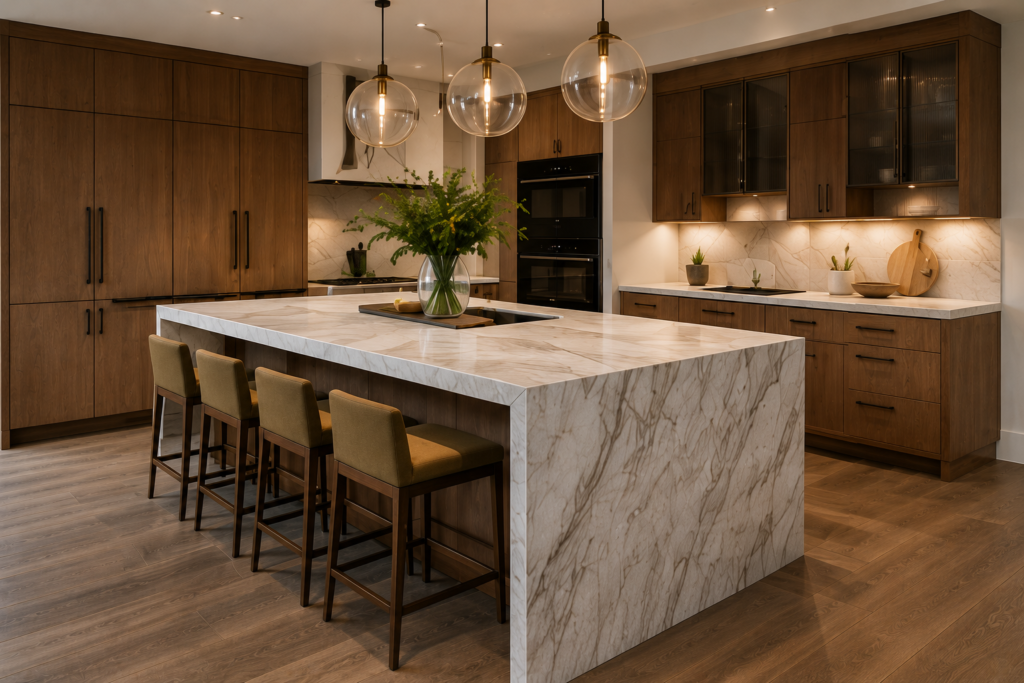
The kitchen has long been considered the heart of the home, but in 2026, it is evolving into something far more sophisticated than simply a functional cooking space or gathering area. Across Ontario’s luxury custom home market, kitchens are increasingly being designed as architectural focal points that feel seamlessly integrated into the broader language and atmosphere of the home itself.
For many years, luxury kitchens were often designed to appear grand and highly decorative, sometimes prioritizing visual impact over restraint or long-term timelessness. Oversized embellishments, excessive detailing, and highly trend-driven finishes became common as homeowners attempted to create kitchens that immediately felt luxurious and impressive.
But in recent years, there has been a very noticeable shift toward kitchens that feel calmer, more intentional, and more architecturally cohesive.
In 2026, homeowners are gravitating toward cleaner forms, integrated appliances, concealed storage systems, sculptural lighting, and material palettes that feel warm and timeless rather than flashy or overly ornamental. Large stone islands with dramatic waterfall edges continue to remain popular, but they are increasingly being paired with softer wood tones, natural textures, fluted detailing, and subtle lighting strategies that help the kitchen feel grounded and elegant rather than overpowering.
One of the most significant changes influencing kitchen design is the growing desire for visual calm. While open-concept kitchens remain highly desirable, homeowners are becoming increasingly aware of how quickly daily life can create clutter and visual noise within these spaces. As a result, secondary prep kitchens, concealed pantries, appliance garages, and hidden storage solutions are becoming essential features in many luxury custom homes.
These secondary spaces allow the primary kitchen to maintain a clean, refined appearance while still fully supporting cooking, entertaining, and family life behind the scenes.
There is also a growing emphasis on kitchens feeling less commercial and more furniture-like in their overall presentation. Cabinetry is becoming more integrated and architectural, often blending seamlessly into surrounding walls and living spaces in a way that allows the kitchen to feel connected to the home’s overall atmosphere rather than standing apart from it visually.
Ultimately, the modern luxury kitchen is no longer simply about showcasing expensive finishes. It is about creating a space that feels timeless, functional, emotionally calming, and beautifully integrated into the rhythm of everyday life.
6. Outdoor Living Spaces are Becoming Fully Immersive Four-Season Experiences
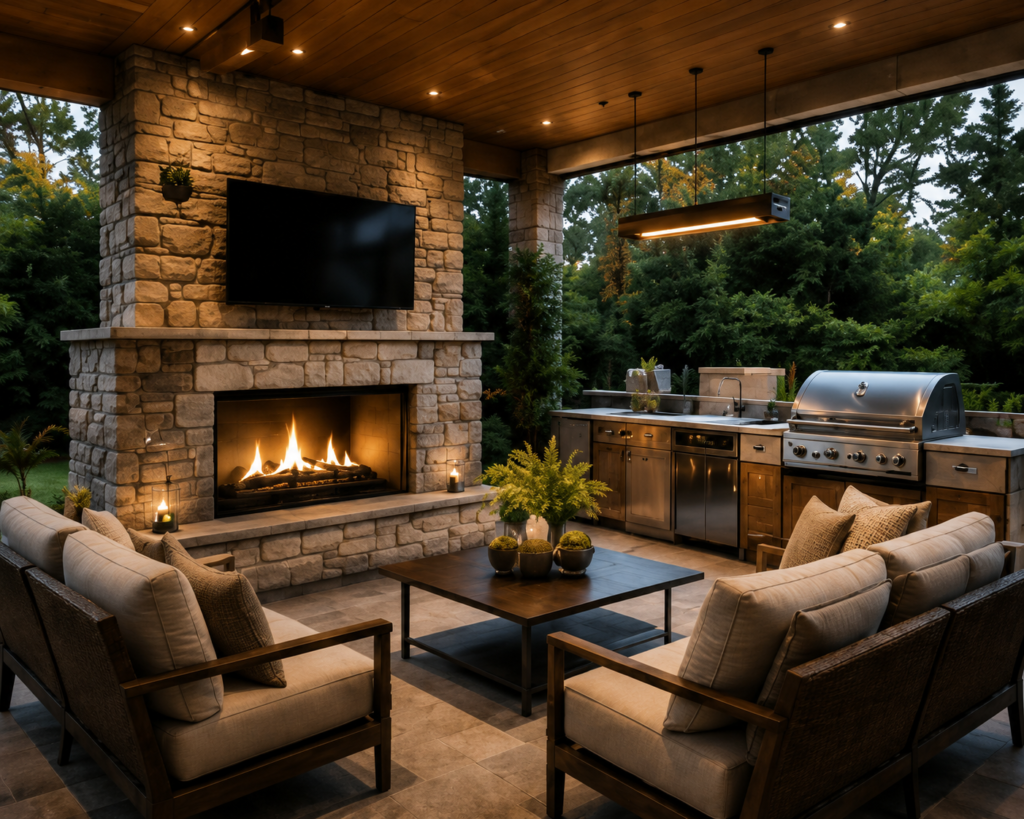
Outdoor living has become one of the most important priorities in luxury home design, but in Ontario, this trend is evolving in a uniquely Canadian way that differs significantly from warmer climates where outdoor spaces are primarily designed for year-round open-air use.
Rather than creating purely seasonal patios or decorative backyards, homeowners are increasingly investing in outdoor environments that function as true extensions of the home and can be enjoyed comfortably across multiple seasons throughout the year.
As a result, outdoor spaces are becoming significantly more thoughtful, immersive, and lifestyle-oriented than in previous years.
Covered outdoor lounges with integrated heating systems, retractable screens, fireplaces, sheltered dining areas, outdoor kitchens, and layered lighting strategies are becoming increasingly common features in custom home projects throughout Ontario. Homeowners are looking for ways to extend the usability of their exterior spaces well beyond the summer months, creating environments that feel equally enjoyable during cool evenings in spring and fall.
There is also a growing shift away from overly formal landscaping toward outdoor spaces that feel more natural, calming, and resort-inspired in their atmosphere. Instead of perfectly manicured environments designed purely for appearance, homeowners are increasingly drawn toward landscaping that creates a sense of privacy, tranquility, and emotional escape from the pace of daily life.
Water features, wellness gardens, natural stone pathways, layered greenery, integrated seating areas, and fire elements are being used to create outdoor experiences that feel restorative rather than purely decorative.
Privacy has also become a major design priority, particularly in suburban custom home markets where homes are often built closer together than in the past. Strategic landscaping, architectural screening, covered structures, and thoughtful lot planning are being used to create outdoor spaces that feel intimate and secluded even within denser neighborhoods.
In many ways, the luxury backyard in 2026 is no longer functioning merely as an accessory to the home. Instead, it is becoming a fully integrated lifestyle environment designed to support relaxation, entertaining, wellness, and emotional recovery throughout the year.
7. Smart Home Technology is Becoming More Invisible, Intuitive, and Integrated Into Everyday Living
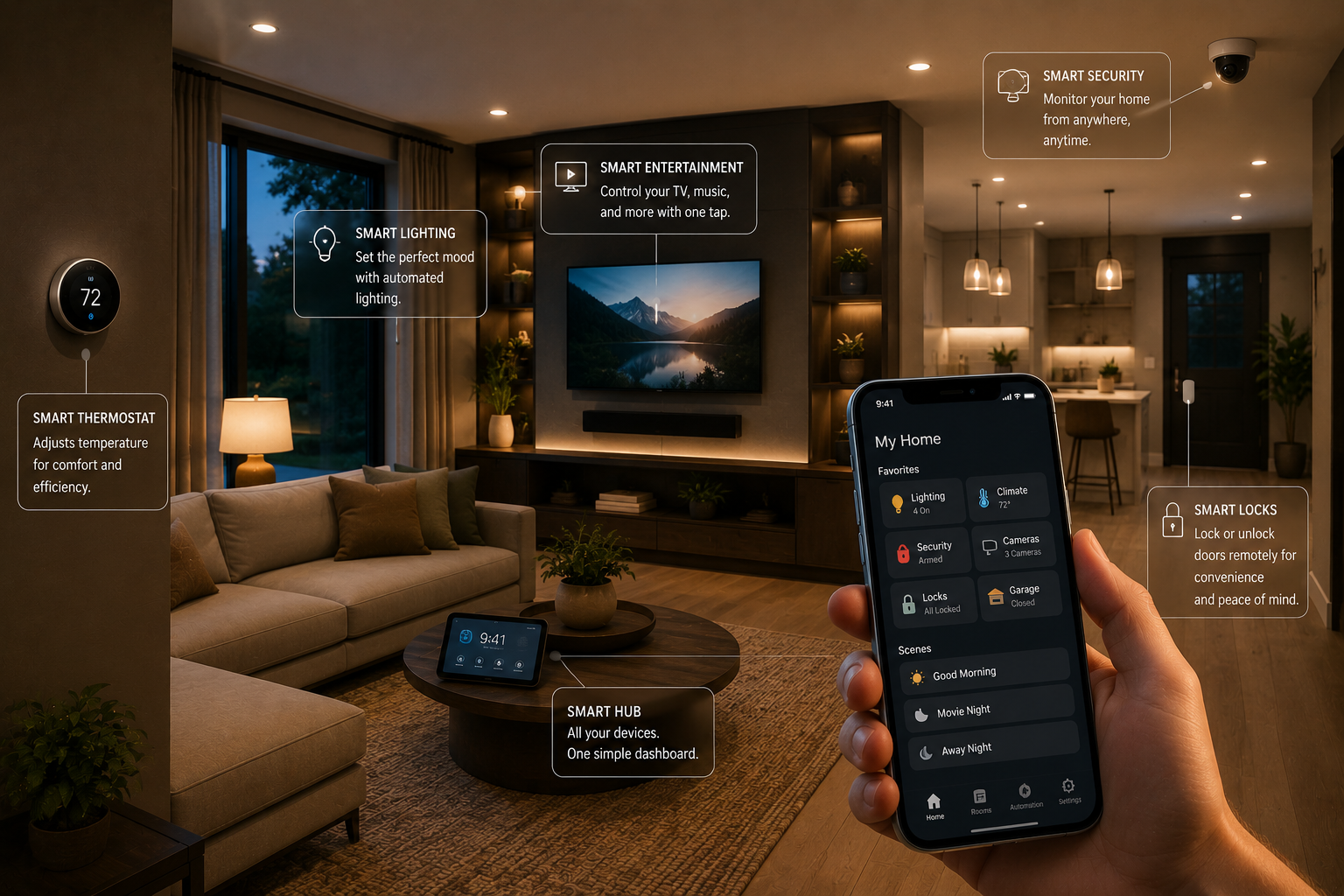
Technology continues to play a major role in luxury custom homes, but the way homeowners want to experience technology has changed dramatically over the past several years.
Earlier generations of smart homes often emphasized visibility and novelty, with technology itself becoming a major focal point of the home. Automated systems, oversized control panels, visible gadgets, and highly technical environments were frequently viewed as symbols of innovation and luxury.
But in 2026, the definition of a truly sophisticated smart home is changing.
Rather than showcasing technology, the most desirable luxury homes are now integrating technology so seamlessly into everyday living that it almost disappears entirely into the background of the home.
Homeowners increasingly want homes that feel effortless rather than overly technical.
Lighting systems quietly adjust throughout the day to support comfort and mood without requiring constant manual input. Climate systems intelligently optimize temperature and energy efficiency in the background. Motorized shades respond automatically to lighting conditions and privacy needs. Security systems integrate discreetly into the architecture without creating visual intrusion. Audio, entertainment, and automation systems are being embedded more seamlessly into the home’s overall design language.
This shift reflects a broader desire for simplicity and calm within the modern home environment.
As technology becomes more advanced, homeowners are actually becoming less interested in interacting with it constantly. Instead, they want systems that quietly improve comfort, efficiency, convenience, and security without adding complexity or distraction to daily life.
Sustainability is also becoming increasingly tied to smart home technology throughout Ontario, particularly as homeowners look for ways to manage energy usage more efficiently during long Canadian winters. Advanced climate control systems, smart lighting management, energy monitoring, EV charging integration, and automated efficiency systems are becoming more important components of modern luxury homes.
Ultimately, the goal of smart home technology in 2026 is no longer to impress people with innovation for the sake of innovation. It is to create homes that feel more intuitive, more responsive, and significantly easier to live in.
8.Timeless Design is Becoming Far More Important Than Short-Term Trends
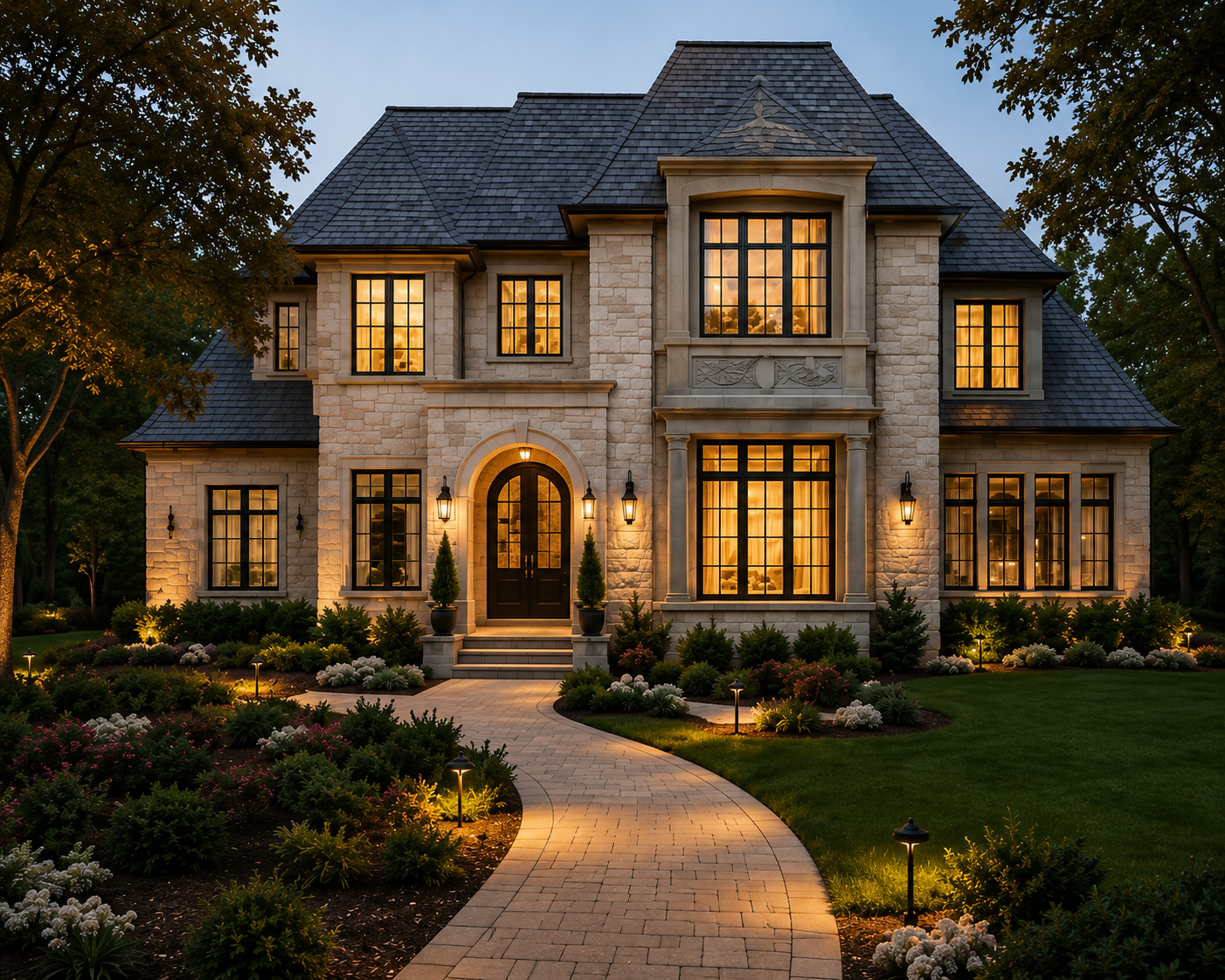
Perhaps the most important shift influencing luxury custom home design in 2026 is the growing movement away from designing homes around temporary trends, social media aesthetics, or features that may quickly feel dated within just a few years.
Homeowners are becoming increasingly thoughtful about longevity and emotional durability in design.
After years of rapidly changing trends dominating online platforms, many people are beginning to recognize how quickly highly trend-driven interiors can lose their appeal. What once felt fresh and exciting can often begin to feel excessive, impractical, or visually tiring surprisingly quickly.
As a result, homeowners are placing much greater value on architectural decisions, materials, and design approaches that will continue to feel elegant, functional, and emotionally comforting for many years into the future.
Natural materials with character and texture are becoming increasingly preferred over highly synthetic or overly polished finishes. Balanced proportions, thoughtful lighting, warm palettes, timeless detailing, and emotionally calming spaces are replacing louder design gestures intended purely for visual impact.
This does not mean homeowners are abandoning modern design or contemporary aesthetics. Rather, they are becoming more selective and intentional about where trends are incorporated and how they will age over time.
People are increasingly asking deeper questions during the design process:
Will this home still feel calming and beautiful ten years from now? Will these spaces continue to support our lifestyle as our family evolves? Will the design age gracefully rather than feeling tied to a specific moment in time?
That shift in thinking is reshaping the custom home industry in a profound way.
Because ultimately, the most successful luxury homes in 2026 are not necessarily the homes with the most dramatic features or the largest budgets. They are the homes that continue to feel meaningful, functional, emotionally grounding, and genuinely enjoyable to live in long after the excitement of construction has passed.

